
Trauma and Diet: The Gut Connection
Many people notice that their relationship with food changes after something frightening, painful, or overwhelming. Appetite disappears for a while or cravings feel impossible to ignore, and it is easy to assume the problem is a lack of discipline or self-control.
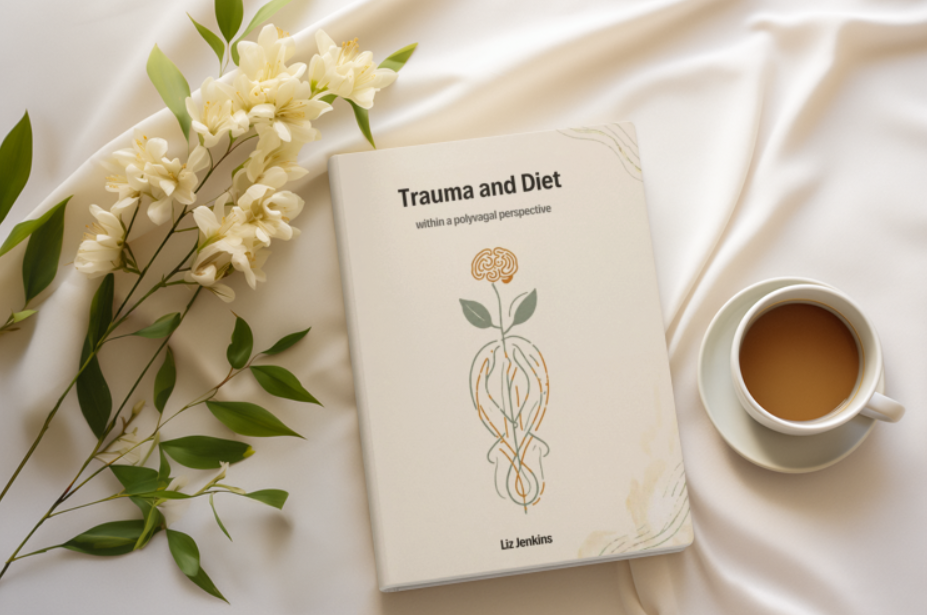
In reality, trauma and diet are closely connected, and the body is usually doing exactly what it was designed to do: trying to look after you. This is the starting point of my new book Trauma and Diet: Incorporating Polyvagal Theory. Let’s look at some of the ideas it explores.
Why trauma and diet are so closely linked
Trauma is often thought of as something that happens in the mind, but the body responds first, and when we feel under threat, the autonomic nervous system shifts into survival mode.
If the experience is never fully processed, the body can stay on guard long after the danger has passed. Drawing on Stephen Porges’ polyvagal theory, the book describes three broad states:
- Safety and connection
- Fight or flight
- Shutdown
Each state changes how we feel, how we digest and, importantly, how we eat. Understanding this can be a real relief, because it moves the conversation away from blame and towards curiosity.
Eating as a way of coping
In the book, I explain that food often becomes one of the quickest ways to manage distress. When the body is wound up and restless, eating can quieten that urgency for a moment. When the body has shut down, appetite can fade because digestion slows. Comfort foods may offer a brief sense of warmth or calm, partly through their effect on brain chemistry, although the relief rarely lasts.
Shame can then add another layer. Many people feel embarrassed about how they eat, or hide it from others. The book makes the point that shame is a physical state as well as an emotion, and not a moral failing. Understanding trauma and eating in this way makes room for kindness rather than criticism.
What stress does to the gut
A large part of the book looks at the gut and brain connection. The two communicate constantly through the vagus nerve, hormones, and immune signals, so emotional distress can show up as bloating, nausea, urgency, or constipation.
It can work the other way too, with an unsettled gut feeding anxiety. Stress hormones also play a part, as prolonged high cortisol is linked with increased appetite and stronger cravings for sugary or fatty foods.
The book also covers irritable bowel syndrome and functional neurological disorder, and it handles both with care. It is clear that these symptoms are real and not imagined, that trauma is only one possible contributor, and that anyone with ongoing gut symptoms should speak to their doctor.
Gentle ways to support yourself
Nothing in the book is about dieting or strict rules. Instead, I offer a trauma-informed way of thinking about food.
Ideas include eating regularly, choosing warm and nourishing meals, and noticing which foods leave you feeling settled and which leave you feeling on edge. There is also a simple mindful eating routine: pause, notice how you feel, use your senses, slow down, and check in with your body afterwards.
Reflective questions run throughout, such as which foods you reach for when stressed, or what your body needs right now. They invite you to explore your own patterns at your own pace, without pressure.
Also worth reading: Gut Health and Mental Health: Can You Eat Your Way to Wellness?
Where to find the book
My new book Trauma and Diet: Incorporating Polyvagal Theory can be purchased on Amazon as a paperback, or is available via my Linktree as a digital download.
Who the book is for
I wrote the book as a gentle guide for both clients and professionals, drawing on my own experience of trauma and healing.
It is written in plain, accessible language, with diagrams and prompts rather than heavy jargon. With a warm and reassuring tone throughout, you are never made to feel judged for how you eat or how your body responds.
How counselling can help with trauma and eating
A book can open the door, but you do not have to work through this alone. In counselling, we can look at what your body is trying to tell you, build a sense of safety and, when you are ready, gently process the experiences underneath.
As trauma is worked through, the body often no longer needs to stay on high alert, and eating patterns can begin to soften.
In my practice I offer psychotherapeutic counselling, and for some people sandplay therapy or dog-assisted sessions can help when words are hard to find. Whichever approach suits you best, the foundation is a calm, non-judgemental space where you set the pace.
If trauma and eating feel tangled together for you, get in touch to book a counselling session and take the first step towards a kinder relationship with yourself when it comes to food and past trauma.